



Pakistan
Mountains, mountains.
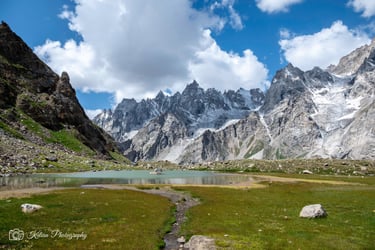
How can we talk about mountains without mentioning the Karakoram? This spectacular mountain range, one of the highest in the world, is located in the western Himalayas and is home to four peaks over 8,000 meters, including the famous K2. It is the ideal place for adventure lovers: few tourists, very warm people, epic treks just as you would imagine them. Tensions between India and Pakistan make this region divisive. Thanks to this, Pakistan is not yet a country of mass tourism. The treks are therefore authentic, as are the mountains.
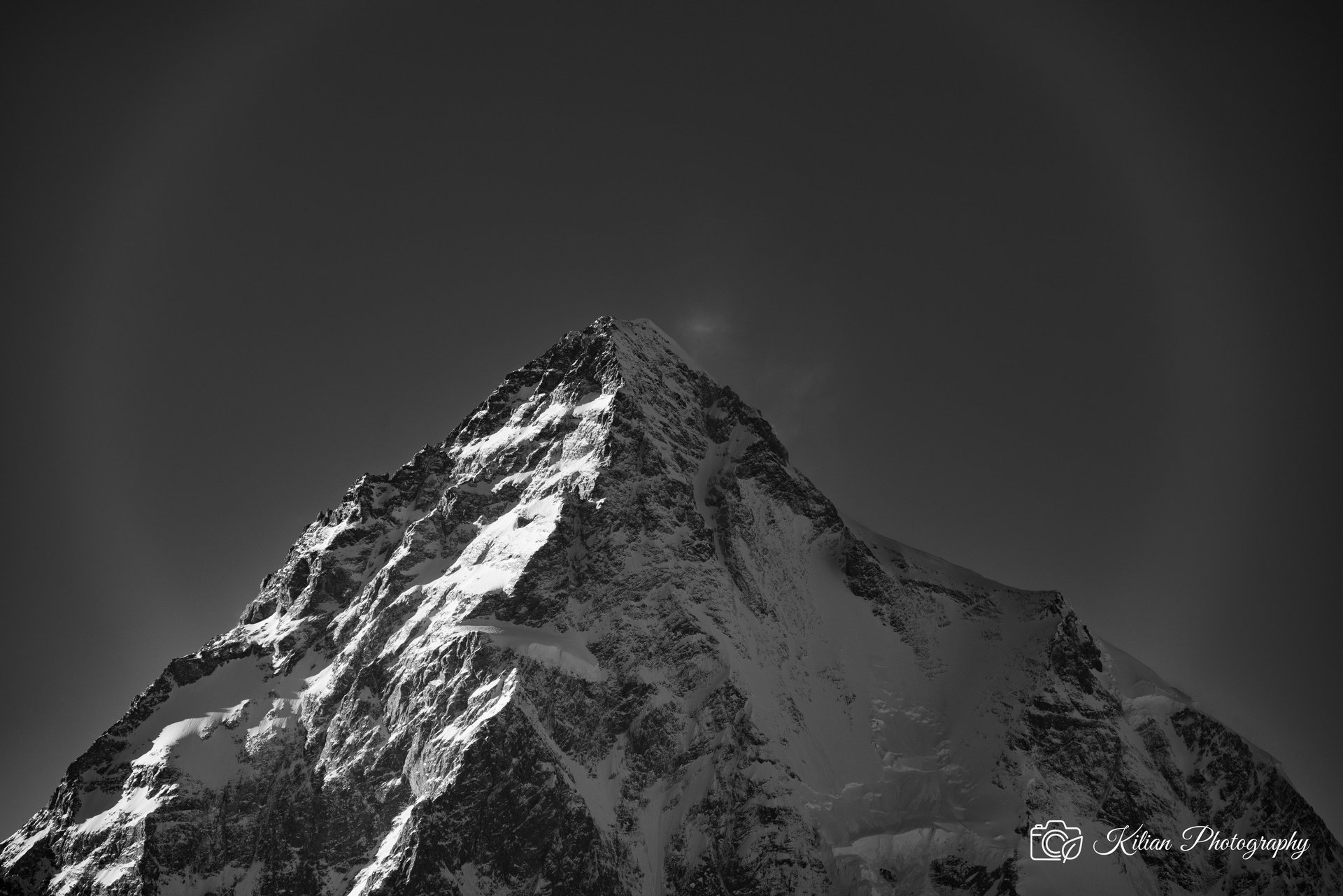
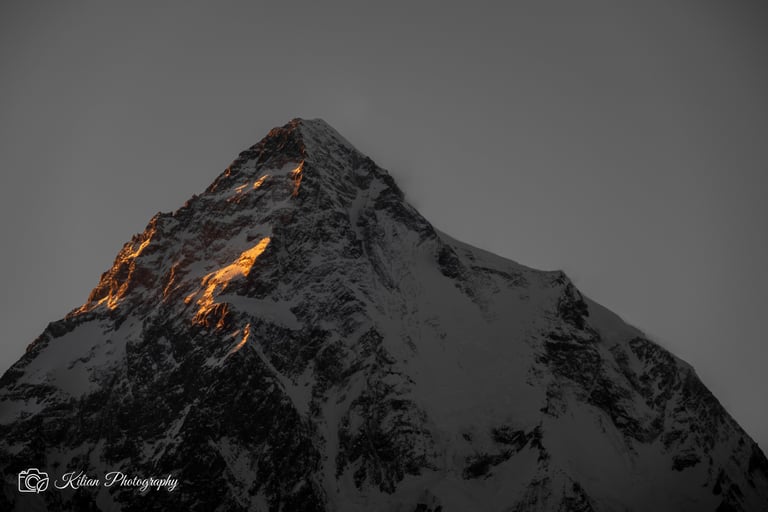
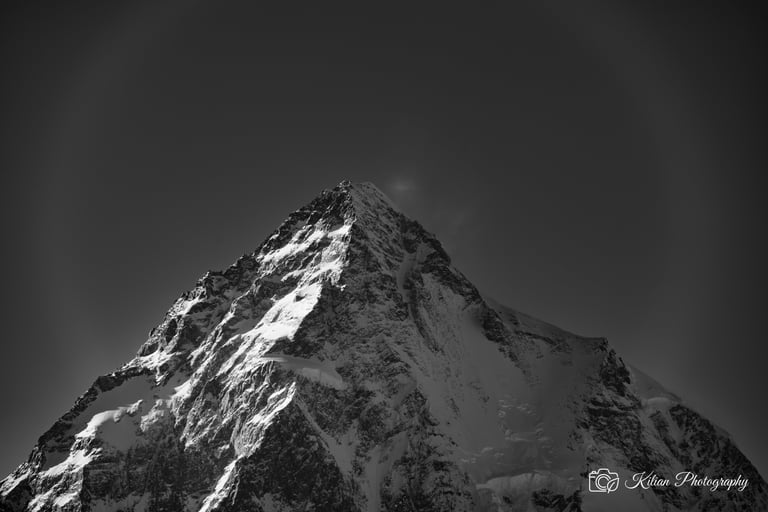
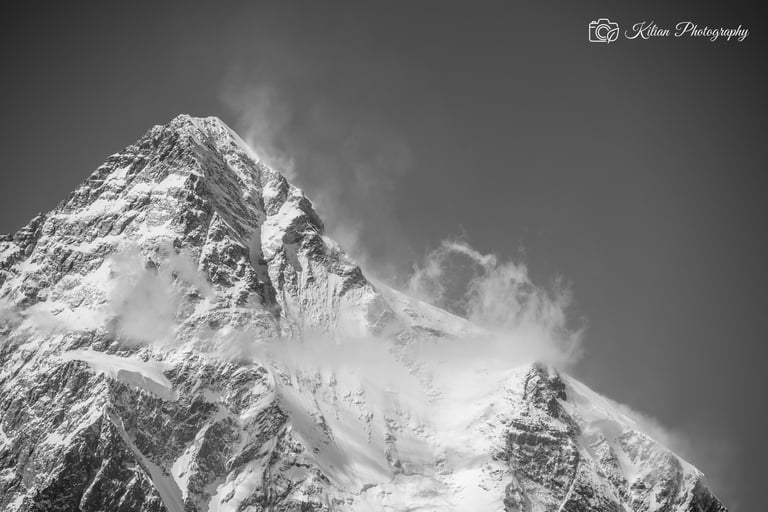
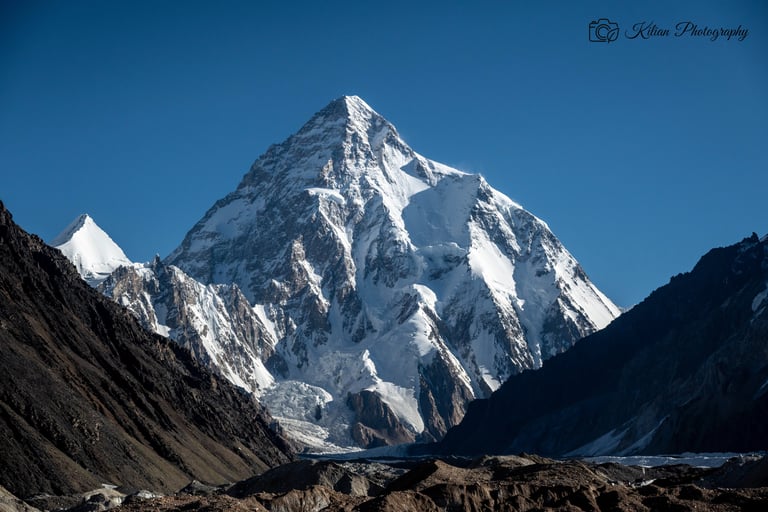
How can we not mention the legendary K2, this giant, remote mountain? Locally, it is called the “Wild Mountain.” And that's no coincidence. To reach it, you need to embark on an epic 7-day journey from the small village of Askole. To return, it's another 4 days of walking. Not to mention that the adventure begins in Skardu with a road and jeeps worthy of adventure movies to get to Askole. But what a spectacle... What views, what encounters.
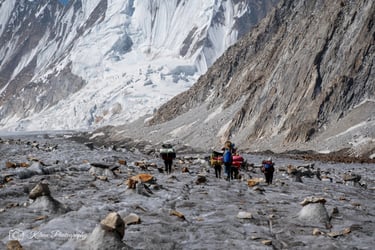
Mountains here, mountains there. Compared to the Alps, the Karakoram is in a different league in every respect. It is much higher: 4,000 meters above sea level on average, compared to 526 meters in the Alps. This means you have to take into account altitude sickness, but also desert terrain. Like any desert, the days are very hot (35°C) and the nights are freezing (-10°C). To go trekking in these regions, you need to be physically and mentally prepared. You also need to have the right equipment and be well accompanied. For all these reasons, the K2 Base Camp Trek is a must for anyone who loves epic locations, sharp peaks, and solitude. Solitude? No, but finding yourself in the middle of nowhere, disconnected, with people from all over the world and all the porters. All together with a common goal in mind: K2.
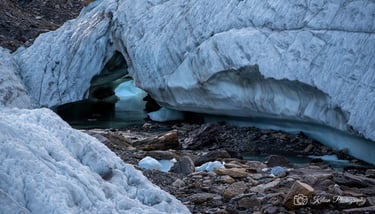
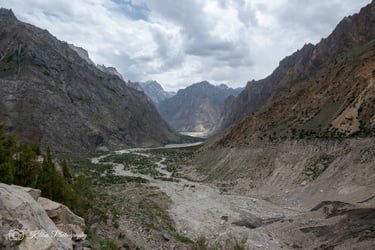
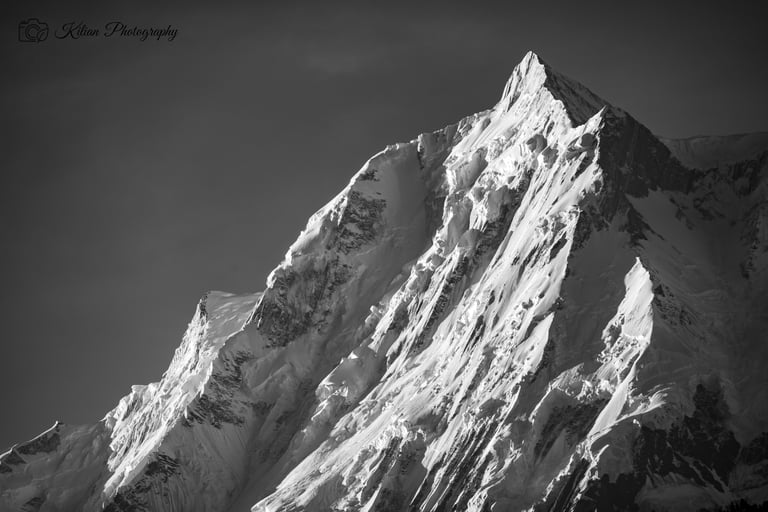
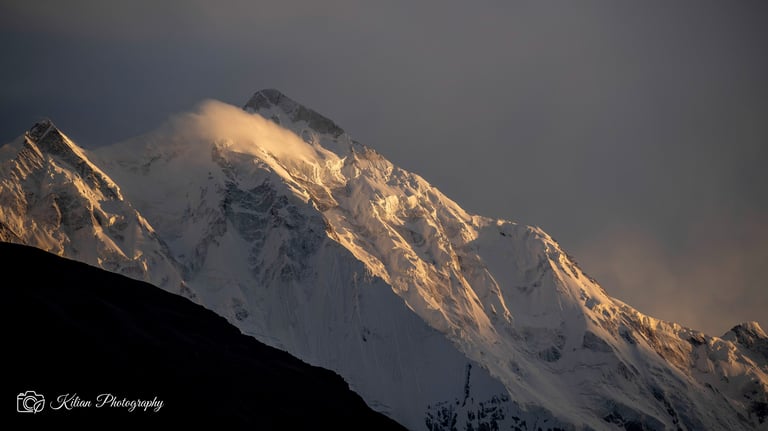
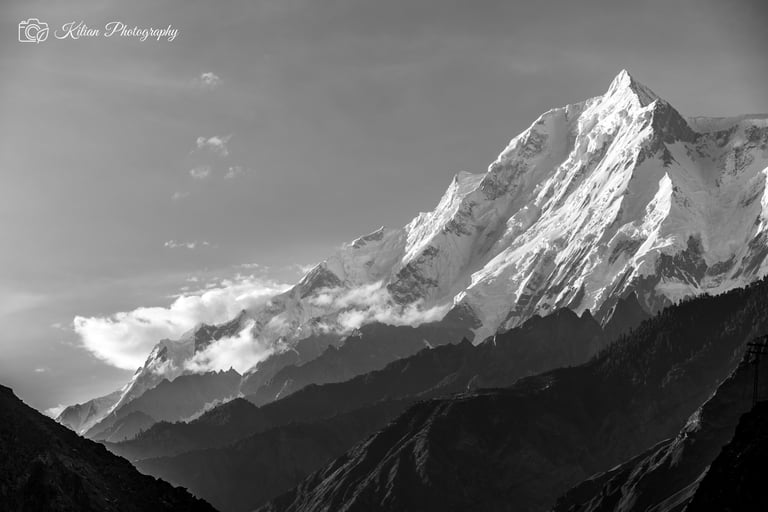
In the other part of the Karakoram, the Hunza Valley reveals equally spectacular landscapes. Its resemblance to the Chamonix Valley is due to a single feature: an immense white mountain towering over the valley below: Rakaposhi (7,788 m). Another similarity is, of course, the mountains. But that's where it ends. Water is scarce in the Karakoram. Only the glaciers, through their melting, provide the water necessary for the inhabitants to live. They have therefore developed a whole system of canals in the villages, making them green. All around is desert...
K2 Base Camp Trek
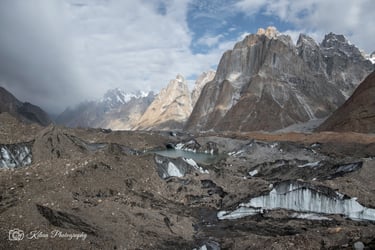
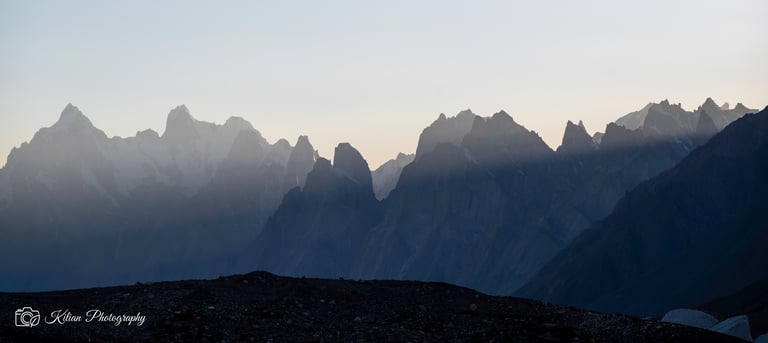
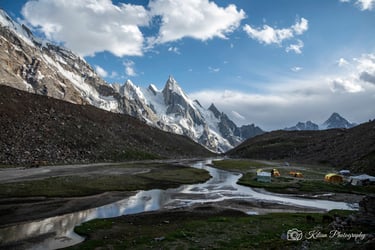
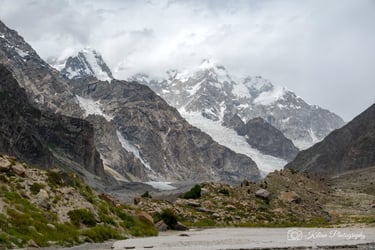
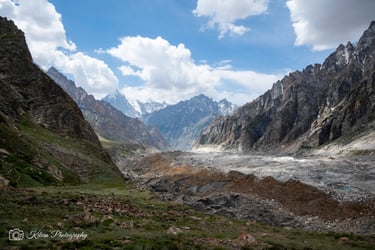
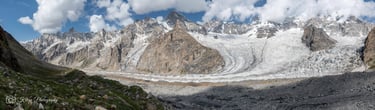
Walking through sand, crossing immense rivers for two days before finally arriving at the foot of the Baltoro Glacier. Breathtaking views of the famous Trango Towers (6,286 m). Then two more days of walking to reach Urdukas, the last green spot before seeing nothing but rocks and ice for the next week...
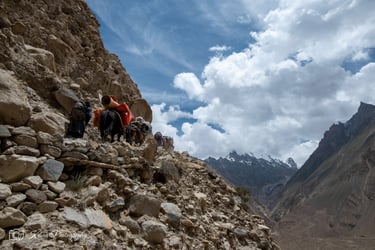
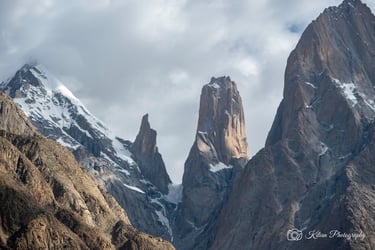
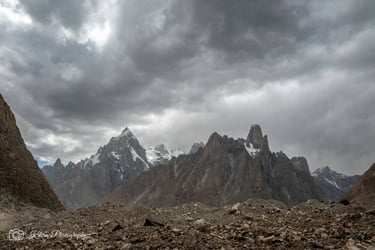
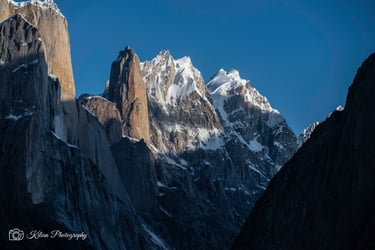
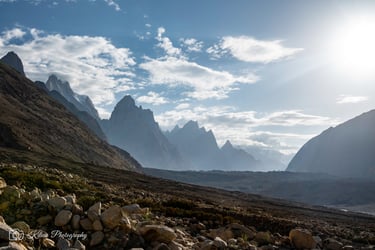
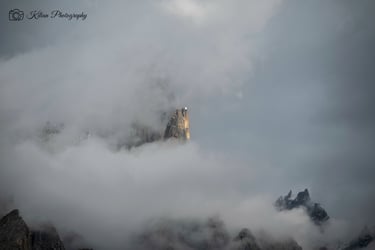
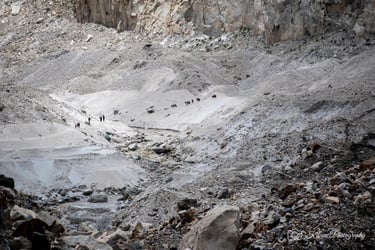
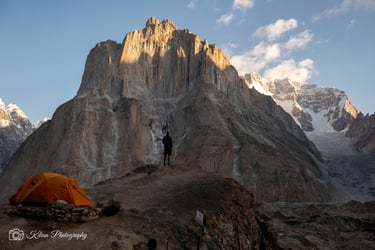
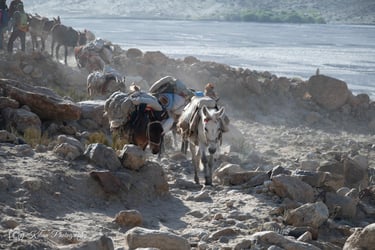
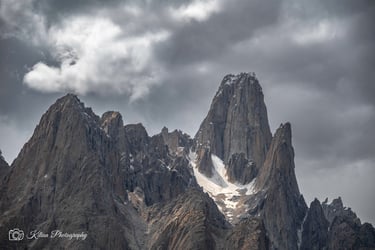
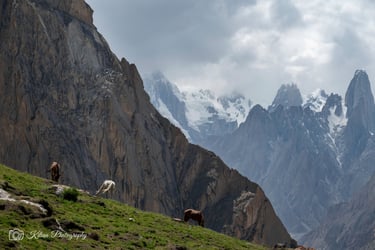
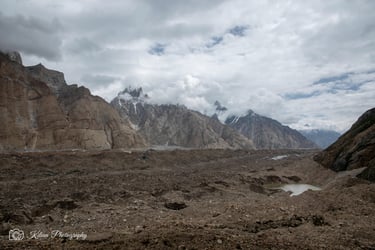
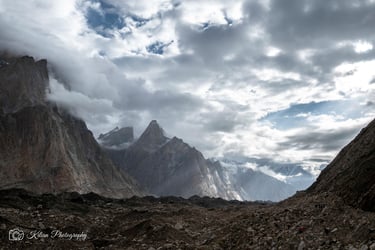
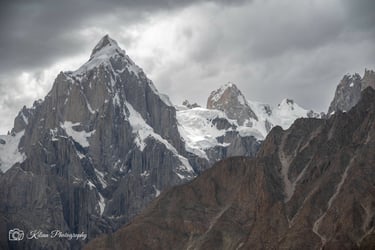
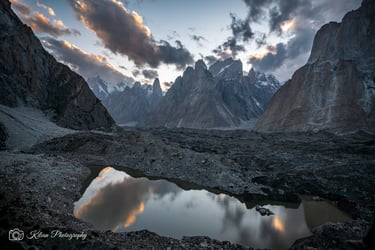
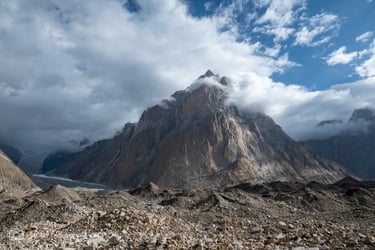
From Askole to Urdukas
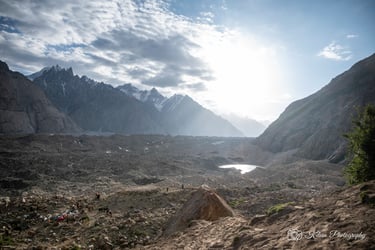
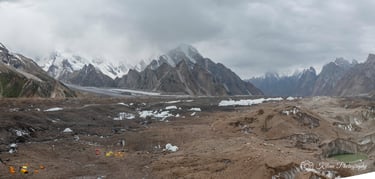
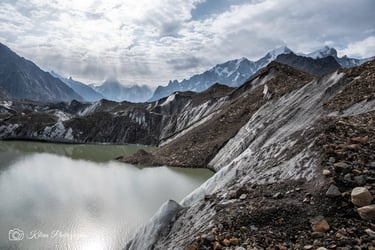
From Urdukas to Concordia
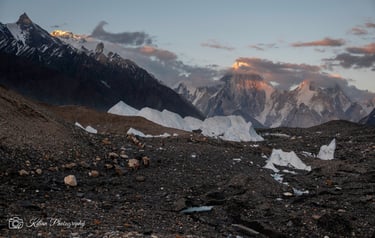
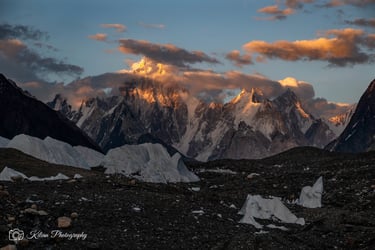
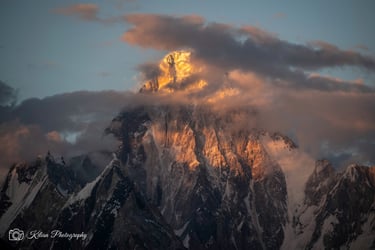
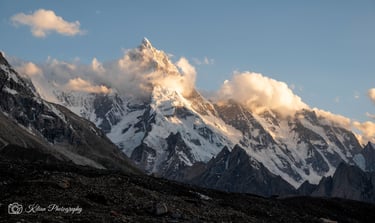
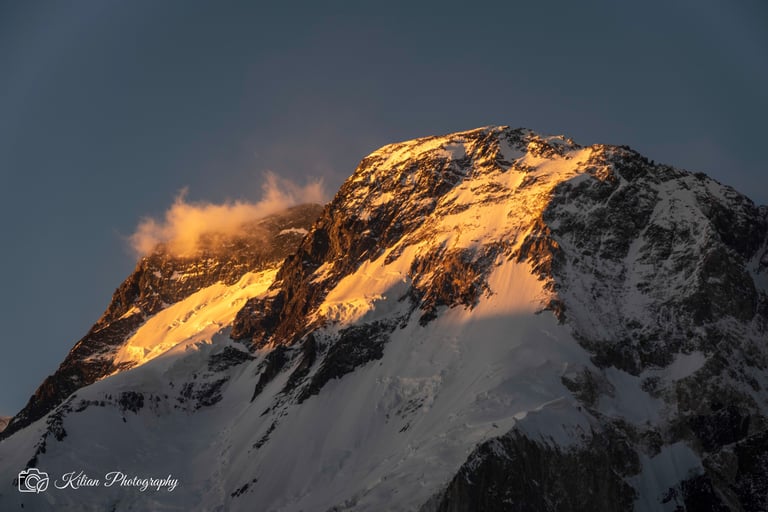
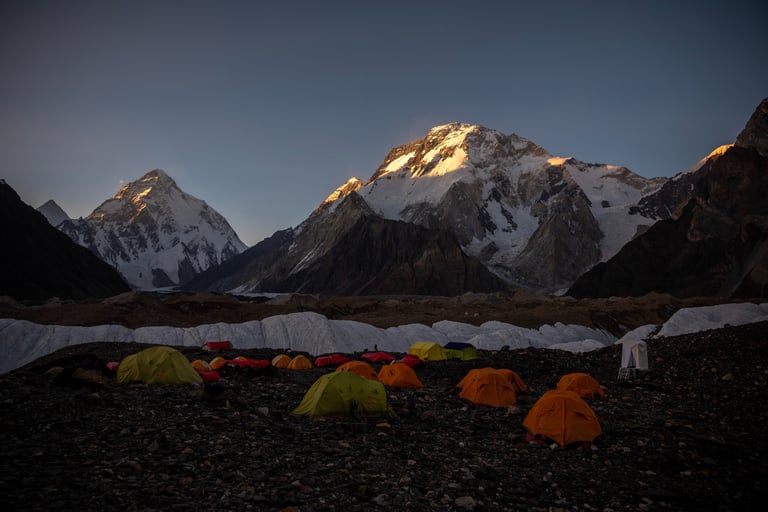
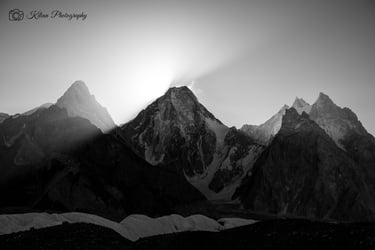
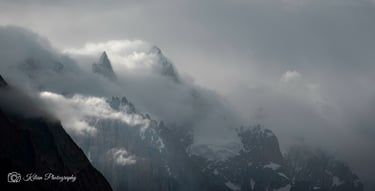
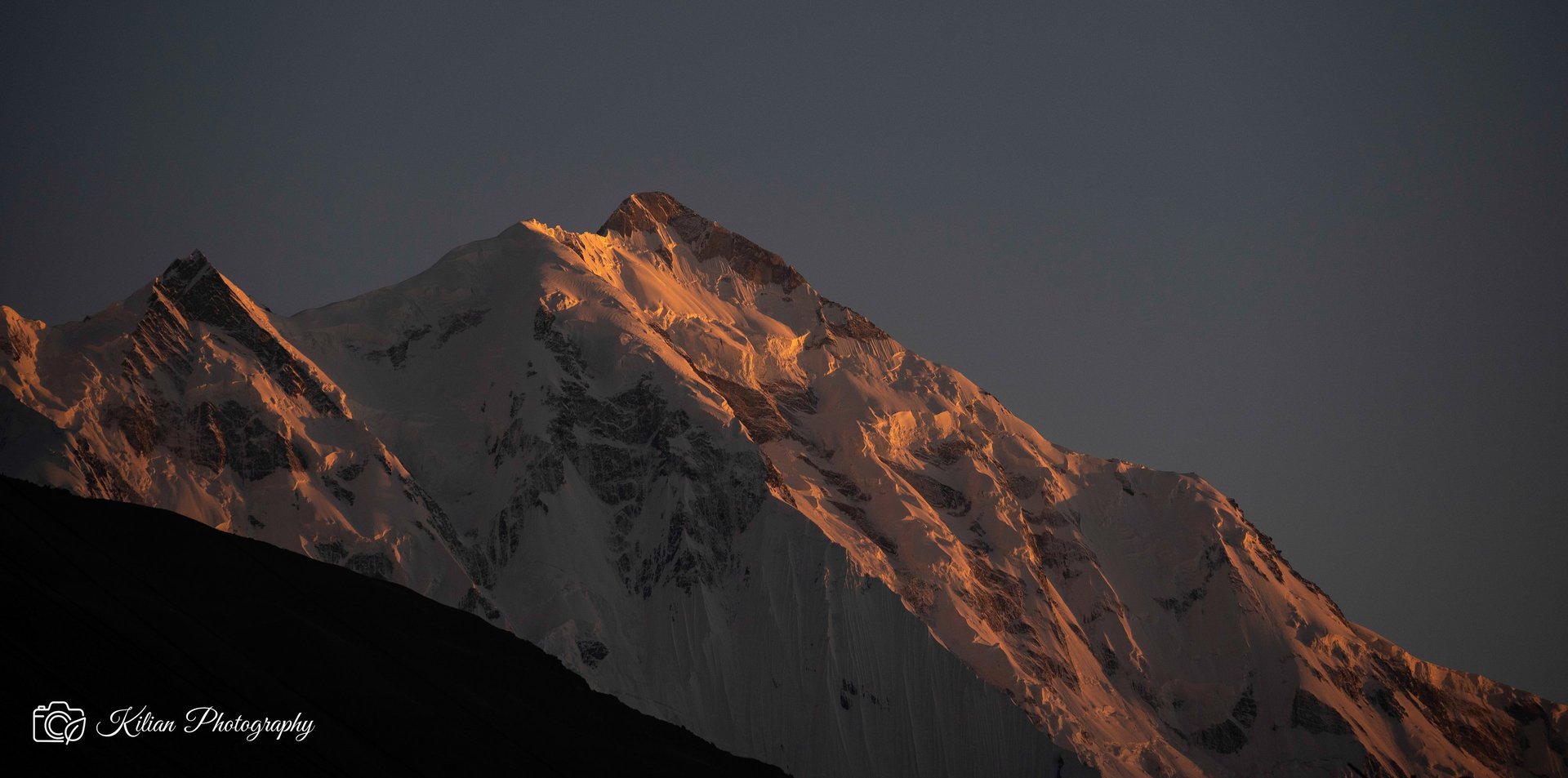
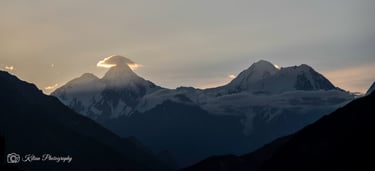
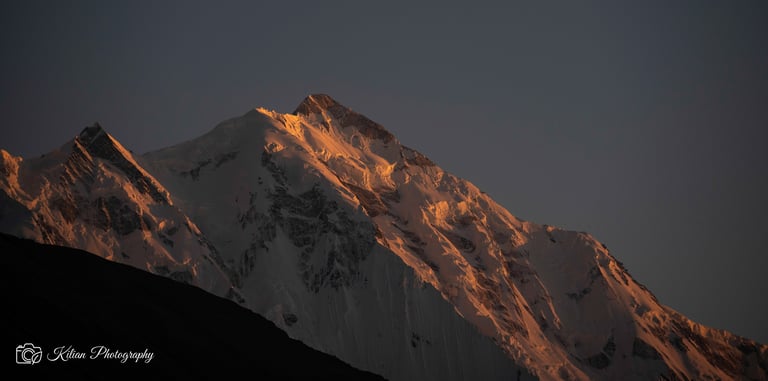
The landscapes become increasingly dramatic. For people looking to disconnect, this is the ideal place. The weather in the Karakoram is unpredictable. The conditions I experienced during the trek were very favorable, and I was able to photograph magnificent sunsets over the surrounding peaks, including Gasherbrum IV (G 4, 7,925 m) and Masherbrum I (M 1, 7,821 m).
Interestingly, many of the mountains in the Karakoram have no names and have long been referred to as K (for Karakoram) followed by a number. Masherbrum I's number is K1.
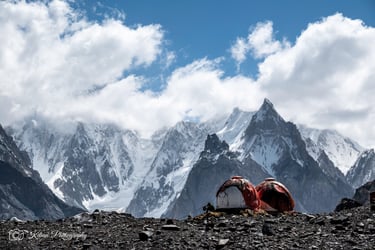
Concordia
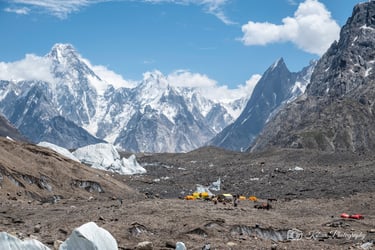
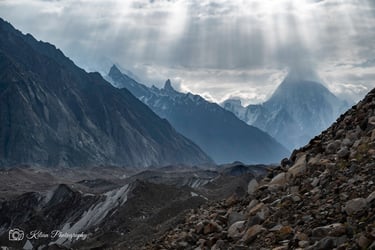
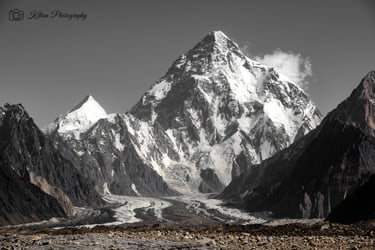
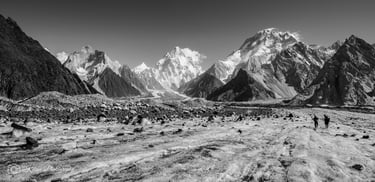
Here, there are four peaks over 8,000 meters: K2 (8,611 meters), Broad Peak (8,051 meters), Gasherbrum I (G 1, 8,080 m), and Gasherbrum II (G 2, 8,035 m), forming a crown called the “Throne Room of the Mountain Gods.” In front of these monsters stands another equally impressive peak: Gasherbrum IV (G 4, 7,925 m).
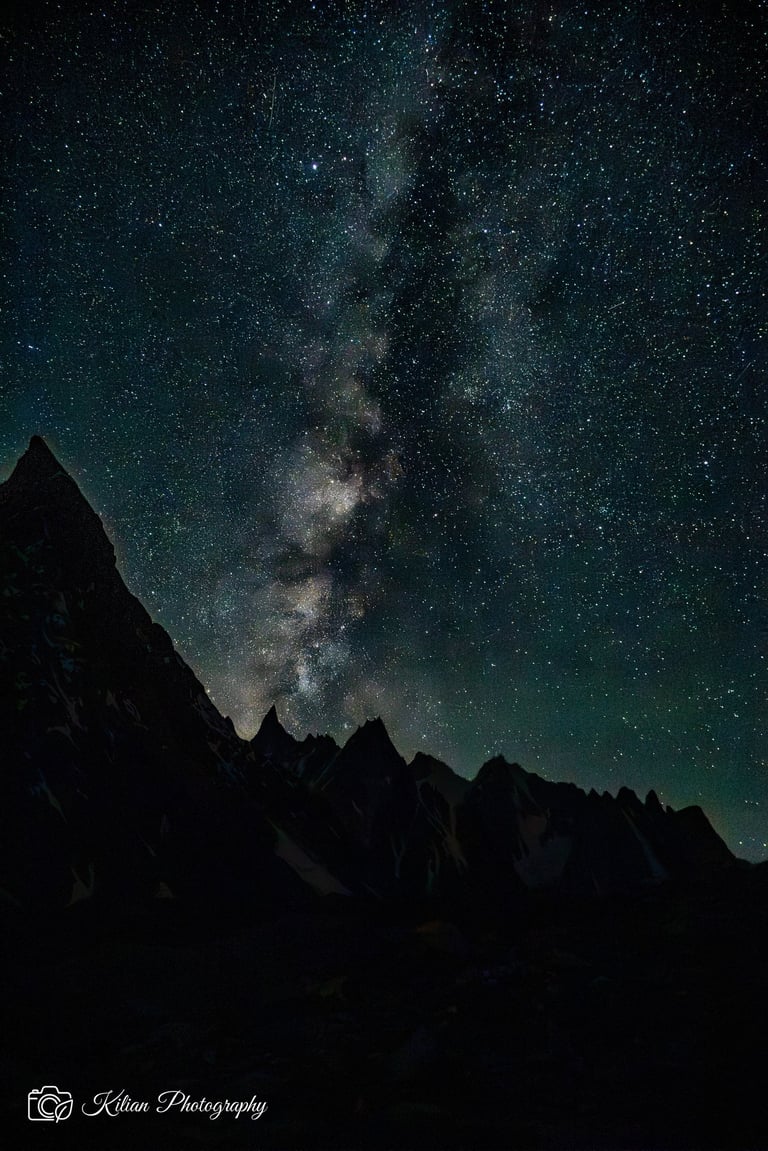
Concordia is already at an altitude of 4,691m, and K2 towers over it by another 4,000m. What's more, the “Gods” treat us to a magnificent starry sky when the weather is clear.
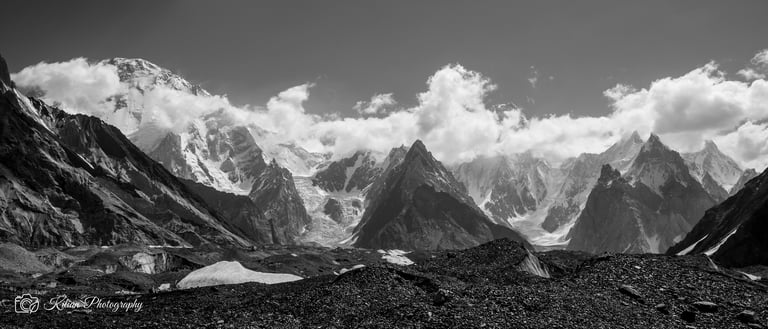
K2 Base Camp
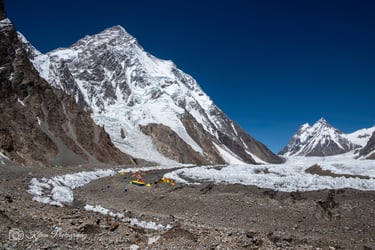
The legendary K2 base camp. I turn back here, at the foot of this majestic mountain. For climbers, the trek is only the beginning before they begin the ascents and descents between different camps in order to acclimatize. After a week of walking, climbers stay for another 1-2 months before attempting the famous “summit push.”
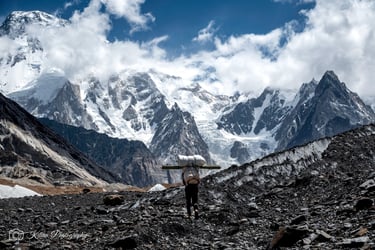
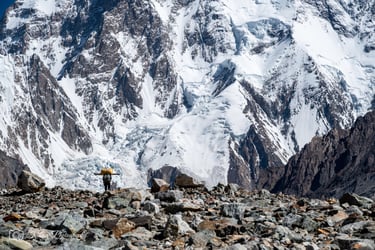
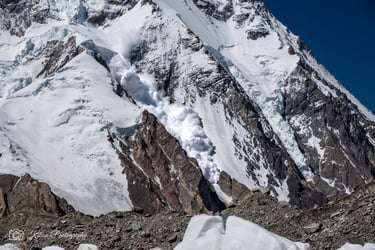
The second photo shows a porter in front of the vertical face of K2. It is at this moment that one realizes the size of the mountain.
From Concordia to Hushe
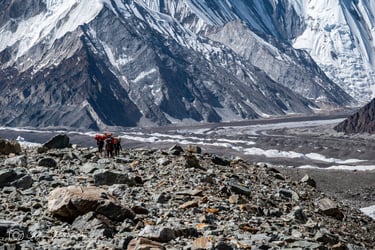
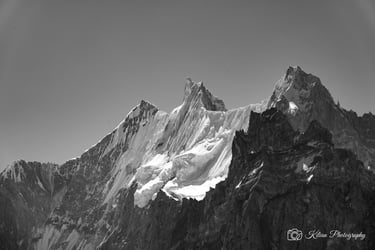
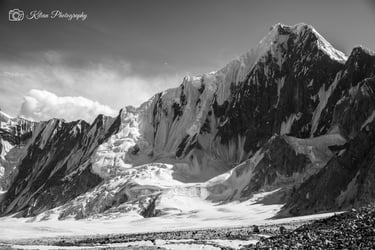
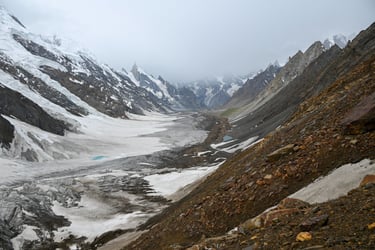
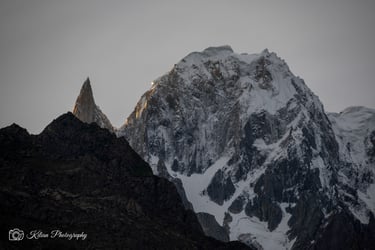
All that remains is to return... But first, we must cross a pass at an altitude of 5,585 m in the night and snow, then descend to Hushe. View of the famous Leila Peak (6,096 m).
Hunza
Another highlight of Pakistan is the Hunza Valley. It is famous for its capital Karimabad, once the capital of the Mongol Empire of Karakoram, and for the Silk Road.
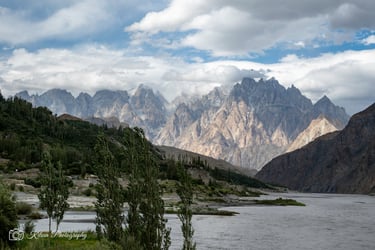
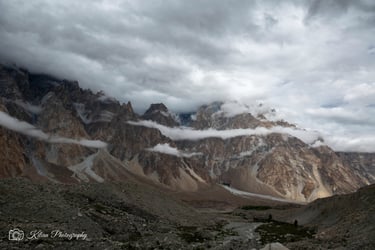
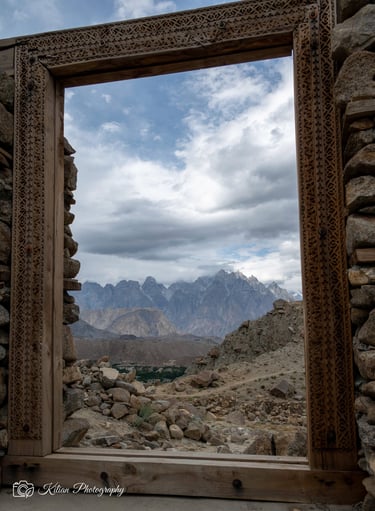
The Karimabad Valley is dominated by the famous and photogenic Rakaposhi (7,788 m), whose images speak for themselves. Higher up in the valley is the hamlet of Passu, dominated by the Passu Cones and the Batura Glacier, which are just as photogenic. To get there, you have to pass through the village of Gulmit with its exceptional viewpoint (Ondra Poygah): a green oasis in the middle of a deserted and steep-sided valley.
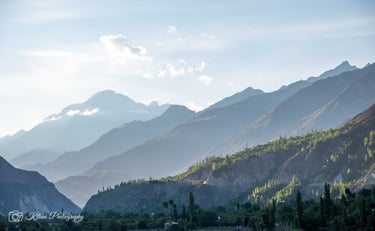
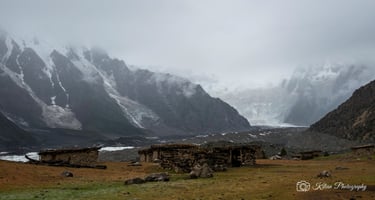
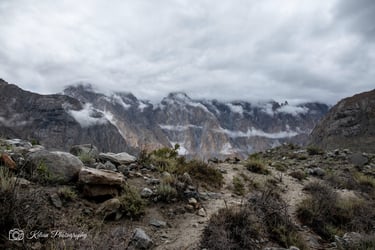
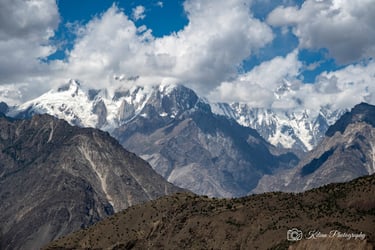
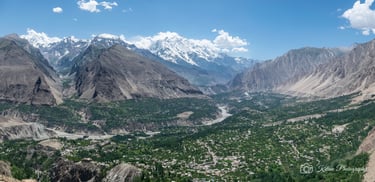
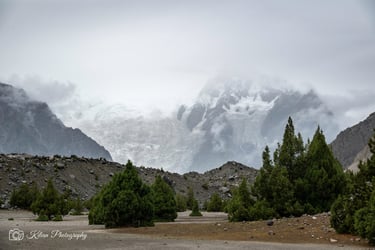
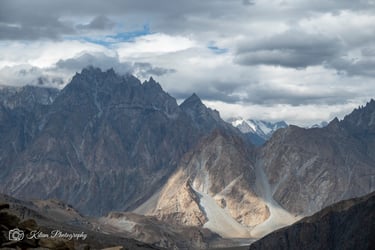
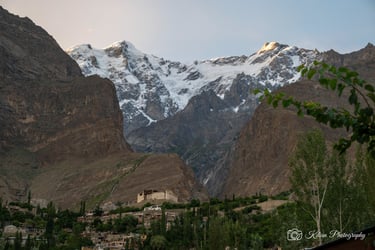
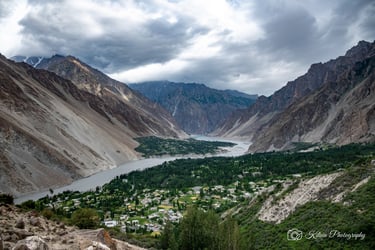
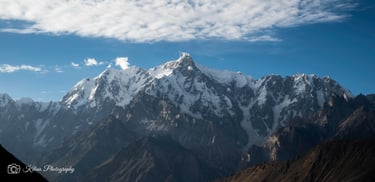
Rakaposhi (7'788m)
Every picture displayed on the website can be printed in poster, framed, or as a canvas
For any inquiries or orders, please contact me here:
Kilian@kilianblaisephotographie.com
© Kilian Blaise 2025. All rights reserved.